
Dietary protein is broken down into amino acids that support muscle protein synthesis, tissue repair, and the production of enzymes and hormones. On busy days, meals are often skipped or compressed, and dietary surveys commonly report protein intake concentrated in the evening meal, with breakfast and daytime snacks dominated by carbohydrate. Milk proteins add a further distinction: whey is digested relatively quickly, while casein clots in the stomach and is released more slowly, which is why blends of the two are common in shelf-stable products.
Federal guidance on protein changed in 2026. The Dietary Guidelines for Americans 2025–2030, released January 7, 2026, recommend 1.2 to 1.6 grams of protein per kilogram of body weight per day and encourage protein at every meal. The Recommended Dietary Allowance (RDA) for healthy adults remains 0.8 grams per kilogram. For a 75 kg (165 lb) adult, that is roughly 60 grams per day at the RDA and 90 to 120 grams per day under the new range. Some nutrition scientists have noted that the higher range was not part of the advisory committee’s own report, and surveys suggest many adults already exceed the RDA, so individual needs vary by age, activity level, and health status. The same guidelines advise limiting added sugars, keeping sodium below 2,300 mg per day, and avoiding highly processed foods, which makes the nutrient trade-offs of convenient products relevant.
People with kidney disease or other conditions that affect protein handling should consult a clinician before increasing protein intake.
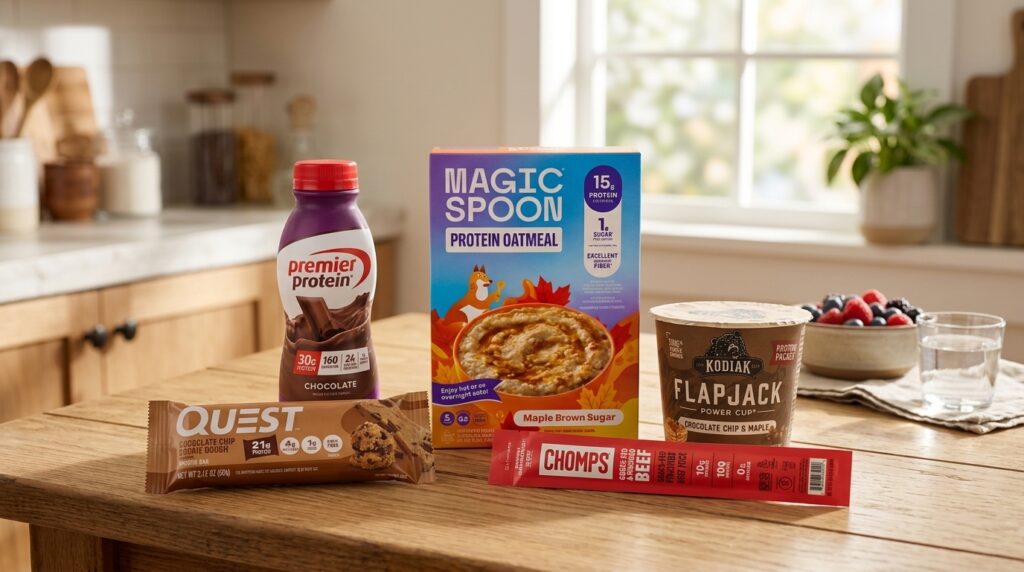
The five products below cover three snack formats (bar, meat stick, ready-to-drink shake) and two breakfast formats (cereal and pancake mix).
Evaluation Metrics
Each product was assessed against the following verifiable criteria:
- Protein amount and density. Grams of protein per serving and per 100 kcal, calculated from label values.
- Protein source. Whether the protein is a complete protein (all nine essential amino acids), such as milk proteins or beef, per label or listing statements.
- Nutrient trade-offs against guideline limits. Added sugar, sodium (benchmark: 2,300 mg per day), and dietary fiber per serving.
- Ingredient profile and allergens. Sweeteners and additives, degree of processing indicated by the ingredient list, and declared major allergens.
Product Analysis
1. Quest Protein Bar, Chocolate Chip Cookie Dough — Snack Bar
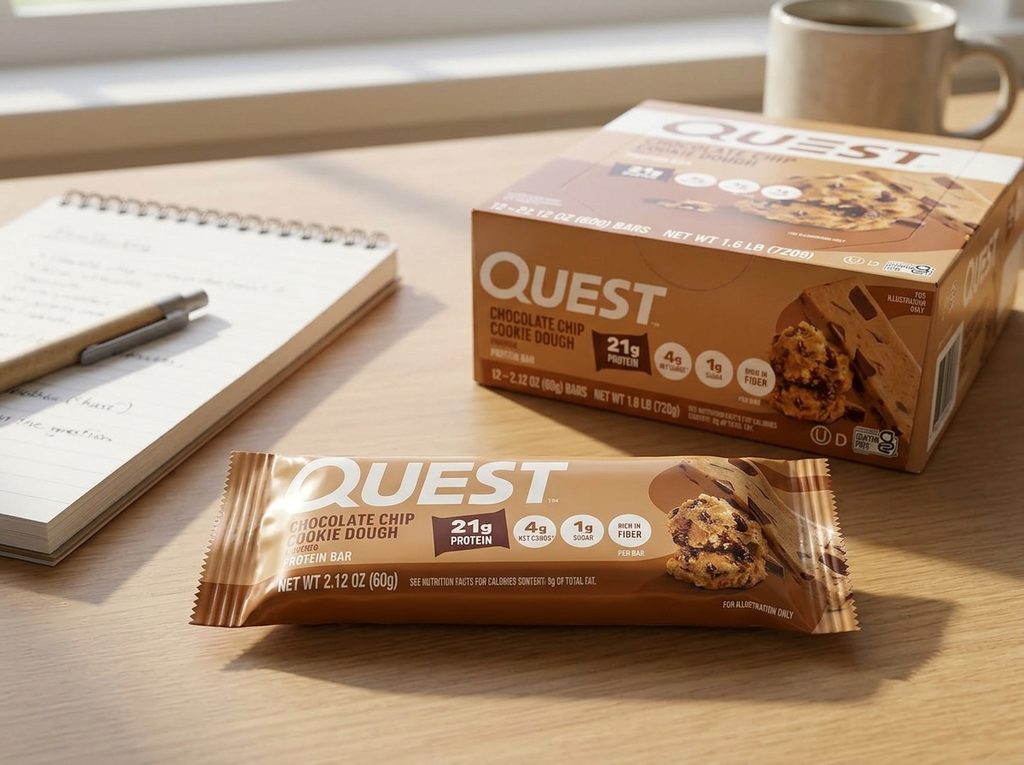
Design overview. A 60 g (2.12 oz) individually wrapped bar built on a milk protein isolate and whey protein isolate blend, with polydextrose and almonds. Sweetened with erythritol, stevia, and sucralose rather than sugar.
Key technical data (per bar)
- Calories: 190; protein: 21 g (about 11 g per 100 kcal)
- Total fat: 9 g; total carbohydrate: 22 g
- Fiber: 12 g; total sugars: 1 g; added sugars: 0 g; sugar alcohols: 6 g
- Sodium: 220 mg
- Listed as gluten free; contains milk and almonds; some listings also declare soy
Health target. Delivers a roughly 20 g protein dose from complete milk proteins with 12 g of fiber in a shelf-stable format. The combination of protein and fiber is associated in controlled studies with greater short-term fullness than lower-protein snacks, although effects on long-term weight vary between studies.
Pros
- Highest protein among the solid snacks in this roundup, with no added sugar.
- Complete protein source (whey and milk protein isolates).
- Fiber content is about 43% of the Daily Value.
Cons
- Contains sugar alcohols (erythritol) and polydextrose, which can cause gas or digestive discomfort in some people at higher intakes. An observational study in Nature Medicine (2023) linked higher blood erythritol levels with cardiovascular events; causation has not been established.
- Contains artificial and non-nutritive sweeteners and a long processed-ingredient list.
- Not suitable for milk or tree-nut allergy.
2. Chomps Original Beef Stick — Meat Snack
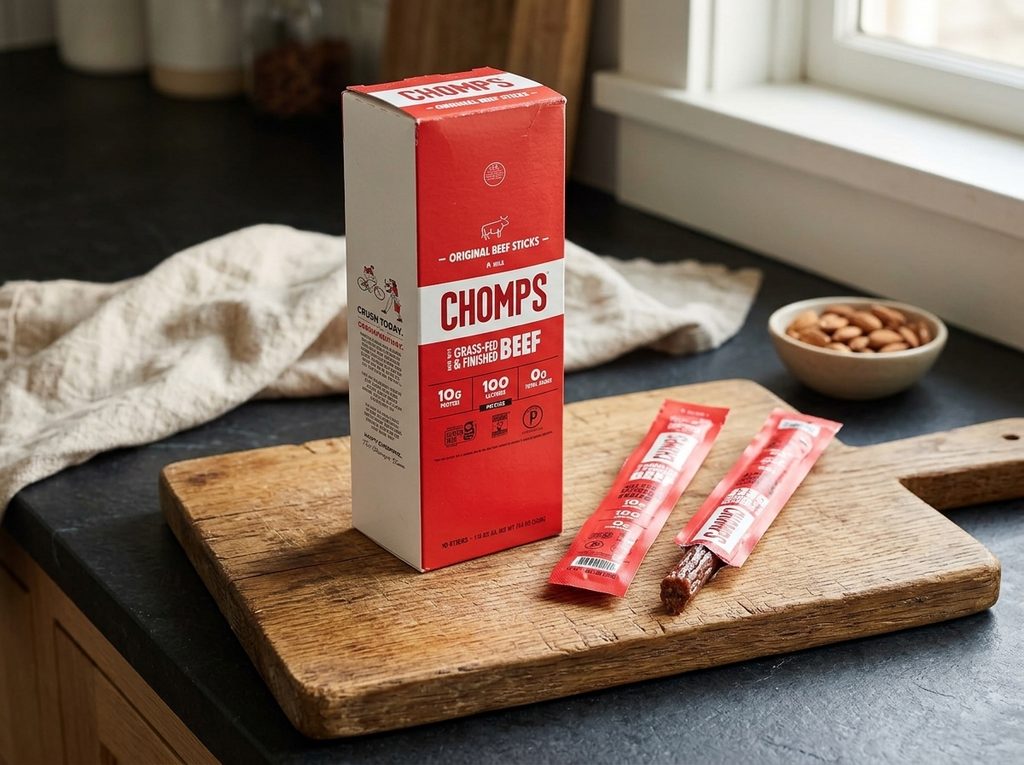
Design overview. A 1.15 oz (32 g) stick made from grass-fed and grass-finished beef in a collagen casing. The ingredient list is short: beef, water, sea salt, lactic acid, cultured celery powder, and spices.
Key technical data (per single stick)
- Calories: 100; protein: 10 g (10 g per 100 kcal)
- Total fat: 7 g; saturated fat: 3 g
- Carbohydrate: 0 g; sugars: 0 g
- Sodium: 380 mg (17% DV); iron: 0.8 mg (4% DV)
- Some multipack listings show different values (for example 90 kcal, 9 to 10 g protein, 290 mg sodium), so the label on the specific pack should be checked
- Listed as free from milk, egg, soy, wheat, peanut, tree nuts, fish, shellfish, and sesame; certified gluten free
Health target. Provides a complete animal protein without carbohydrate or sugar and requires no refrigeration before opening, which suits low-carbohydrate eating patterns and allergen-restricted diets.
Pros
- Zero sugar and a short ingredient list.
- Free from the major allergens, which is uncommon among high-protein snacks.
- Portable, single-hand format with no preparation.
Cons
- Highest sodium per gram of protein in this roundup (380 mg per 10 g protein).
- Cured and dried meat products fall under the processed-meat category, which the International Agency for Research on Cancer classified as carcinogenic to humans (Group 1) in 2015; health agencies generally advise limiting intake.
- Protein per serving is half that of the bar or shake, and saturated fat is 15% of the Daily Value.
- No fiber.
3. Premier Protein Shake, Chocolate — Ready-to-Drink Shake
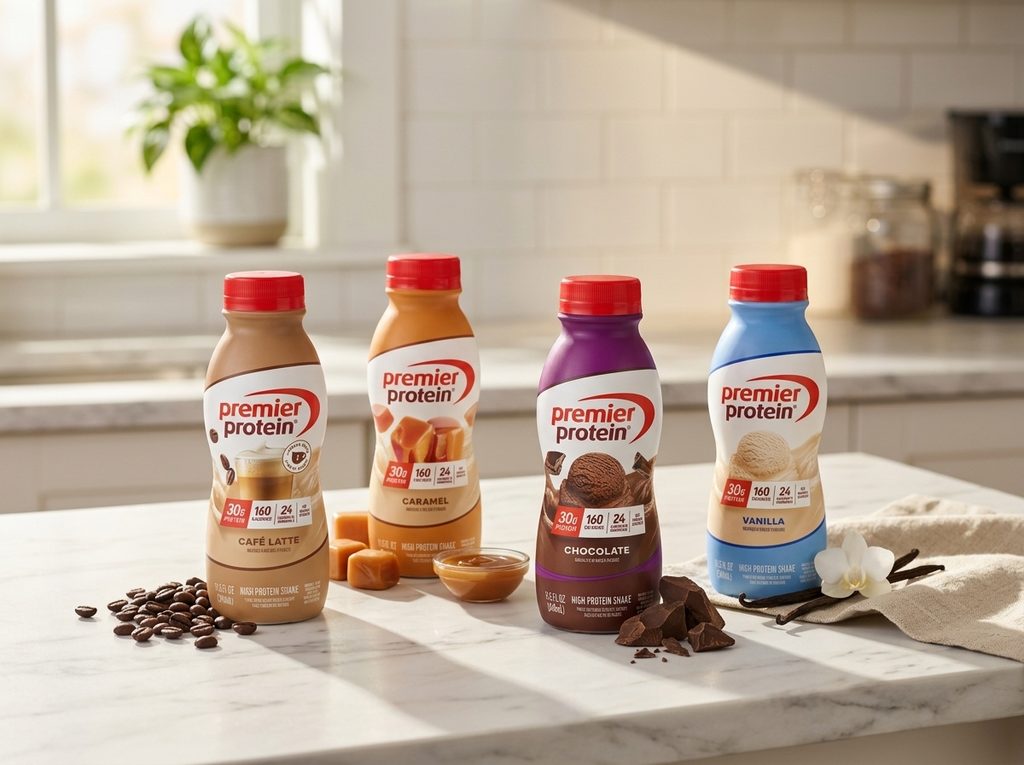
Design overview. A shelf-stable 11 to 11.5 fl oz carton using a milk protein concentrate, calcium caseinate, and whey protein concentrate blend, fortified with vitamins and minerals. Sweetened with sucralose and acesulfame potassium.
Key technical data (per shake)
- Calories: 160; protein: 30 g (about 19 g per 100 kcal)
- Total fat: 3 g; total carbohydrate: 5 g; fiber: 3 g
- Total sugars: 1 g; added sugars: 0 g
- Sodium: 190 mg; calcium: 650 mg (50% DV); vitamin D: 6 mcg (30% DV)
- Contains milk; listed as gluten free
Health target. Provides the largest single protein dose in this roundup at the lowest calorie cost, from a whey and casein blend that combines faster and slower digestion. The calcium and vitamin D content supports bone mineral intake in people who consume little dairy.
Pros
- Highest protein per calorie of the five products.
- No added sugar and relatively low sodium.
- Drinkable format requires no preparation and can be consumed as a breakfast or a snack.
Cons
- Contains non-nutritive sweeteners, and some listings include carrageenan and other stabilizers, so it falls into the highly processed category the 2025–2030 guidelines advise limiting.
- Liquid format may be less satiating for some people than solid food with similar protein, as suggested by some satiety studies.
- Contains milk; not suitable for milk allergy.
- Carton sizes differ between listings (11 versus 11.5 fl oz).
4. Magic Spoon Fruity Grain-Free Cereal — Breakfast Cereal
Design overview. A grain-free, ready-to-eat cereal in a 7 oz box (about five servings) made from a milk protein blend (casein and whey protein concentrate) with allulose and monk fruit extract as sweeteners, and plant oils.
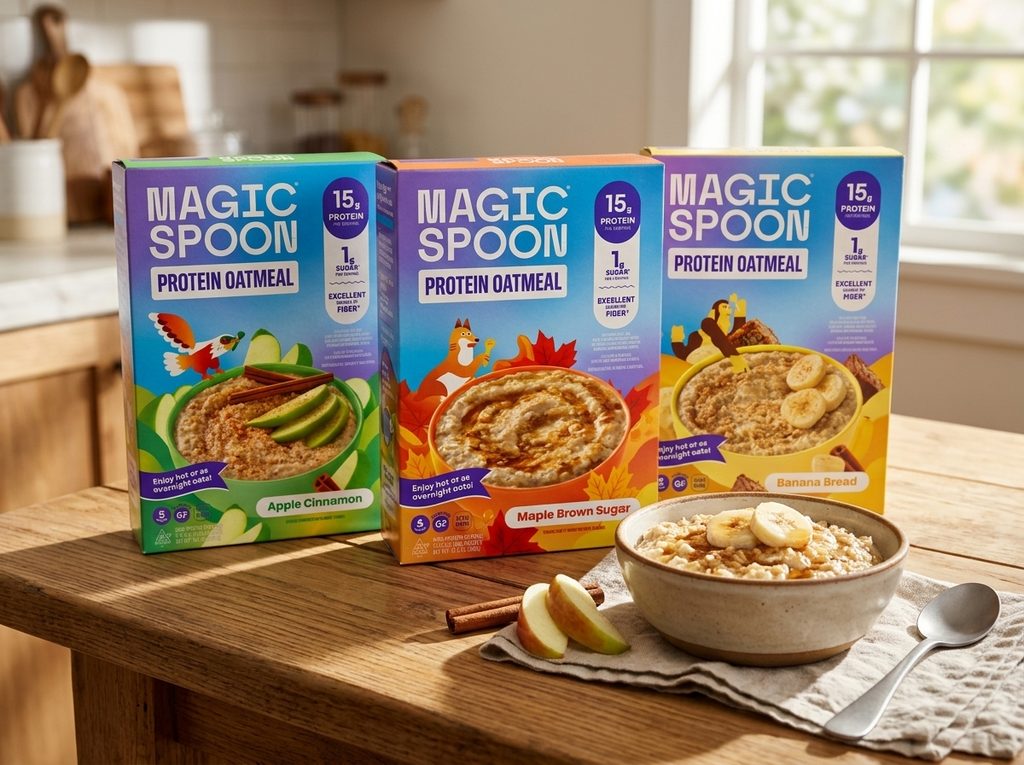
Key technical data (per 1 cup, about 37–38 g, dry)
- Calories: 150; protein: 13 g (about 9 g per 100 kcal)
- Total fat: 8 g; carbohydrate: 15 g; fiber: 1 g
- Total sugars: 0 g on the label; the listing notes that the FDA does not count allulose as a sugar for labeling, and reports 4 g net carbohydrate
- Sodium: 160 mg
- Contains milk; certified gluten free; made in a facility that processes wheat, soy, tree nuts, and sesame
Health target. Replaces a carbohydrate-dominant breakfast cereal with a protein-containing one. Listings compare it with a conventional fruity cereal at 2 g protein and 12 g sugar per serving.
Pros
- Requires no cooking and can be eaten dry or with milk.
- 0 g total sugars on the label and the lowest sodium of the five products.
- Complete milk-protein source.
Cons
- Only 1 g of fiber per serving.
- Allulose can cause digestive discomfort in some people at higher intakes. Its labeling exemption means the sweetener is not reflected in the sugar line.
- Protein per calorie is lower than the shake, bar, or meat stick, and added milk raises both protein and calories.
- Highly processed ingredient list (isolated proteins, sweetener blend, inulin, oil blend).
5. Kodiak Cakes Power Cakes, Buttermilk Flapjack and Waffle Mix — Breakfast Mix
Design overview. A dry mix made with whole grain wheat flour, whole rolled oats, buttermilk, and added protein. Prepared by adding water (or milk or egg) and cooking on a skillet or waffle iron.
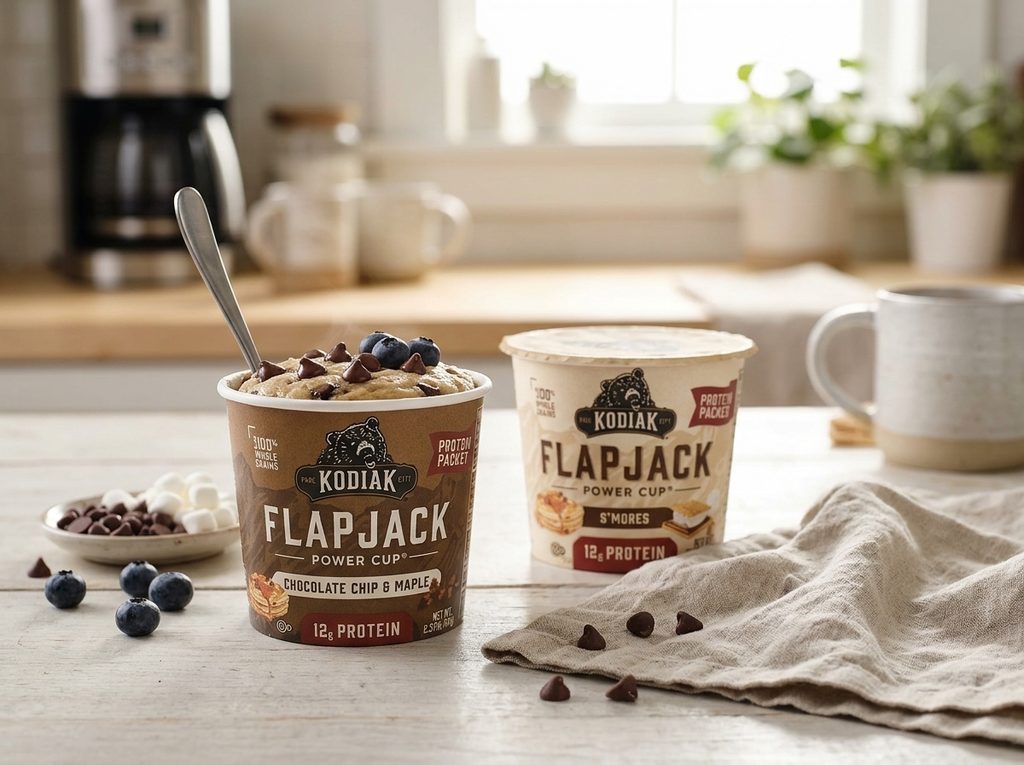
Key technical data (per 1/2 cup dry mix, about 53 g)
- Older label: 220 kcal and 15 g protein (about 7 g per 100 kcal), 9 servings per 20 oz box
- Newer label on some listings: 190 kcal and 14 g protein, about 11 servings per box
- Carbohydrate: 30–37 g; fiber: 5 g; added sugars: 2–3 g
- Sodium: 380–450 mg
- Manufacturer states that preparing with milk raises protein per serving by about 3 g and with milk plus an egg by about 6 g (older 15 g label)
- Contains wheat and milk; may contain traces of egg, soy, and tree nuts
Health target. A whole-grain breakfast base with 5 g of fiber and a protein content higher than typical pancake mixes. Whole grains and fiber contribute to the guideline preference for whole grains over refined grains.
Pros
- Highest fiber of the five products and made with 100% whole grains.
- Protein can be raised by preparing with milk or an egg.
- Lower added sugar than most sweetened breakfast products.
Cons
- Lowest protein density of the five (about 7 g per 100 kcal as sold).
- Sodium of 380–450 mg per half cup is high for a breakfast base before toppings.
- Requires cooking equipment and time, so it fits a busy morning less well than the other four.
- Label values differ between package versions and sizes, and syrup or toppings add sugar.
Comparison Summary
| Product | Format | Protein per serving | Calories | Protein per 100 kcal | Sodium | Added sugar |
| Quest Cookie Dough Bar | Bar | 21 g | 190 | ~11 g | 220 mg | 0 g |
| Chomps Original Beef Stick | Meat stick | 10 g | 100 | ~10 g | 380 mg | 0 g |
| Premier Protein Chocolate Shake | Drink | 30 g | 160 | ~19 g | 190 mg | 0 g |
| Magic Spoon Fruity Cereal | Cereal | 13 g | 150 | ~9 g | 160 mg | 0 g (allulose not counted) |
| Kodiak Buttermilk Power Cakes | Pancake mix | 14–15 g | 190–220 | ~7 g | 380–450 mg | 2–3 g |
Protein per 100 kcal was calculated from label values for the dry or as-sold product; preparation with milk, egg, or toppings changes totals.
The five products trade off differently. The shake maximizes protein per calorie, the bar adds fiber, the beef stick offers the shortest ingredient list and an allergen-free profile at higher sodium, the cereal is the least preparation-intensive breakfast, and the pancake mix provides the most fiber but the lowest protein density. Most of the snack products (bar, shake, cereal) rely on isolated proteins and non-nutritive sweeteners, so whole-food protein sources such as eggs, yogurt, cheese, nuts, and legumes remain the benchmark for the guideline preference for minimally processed foods. Individual protein needs should be set with a physician or registered dietitian, particularly for older adults, people with kidney disease, and people managing a medical condition.
Disclosure:
As an Amazon Associate, qualifying purchases may generate a commission at no added cost to the buyer. Nutrition values reflect manufacturer and retailer listings for the specific flavors named and should be confirmed against the label on the current Amazon listing, since formulations and pack sizes change. Pricing is intentionally omitted.